

The shopper’s phone is getting smarter. Here’s what retail brands need to know.
25th June, 2026 | Poq
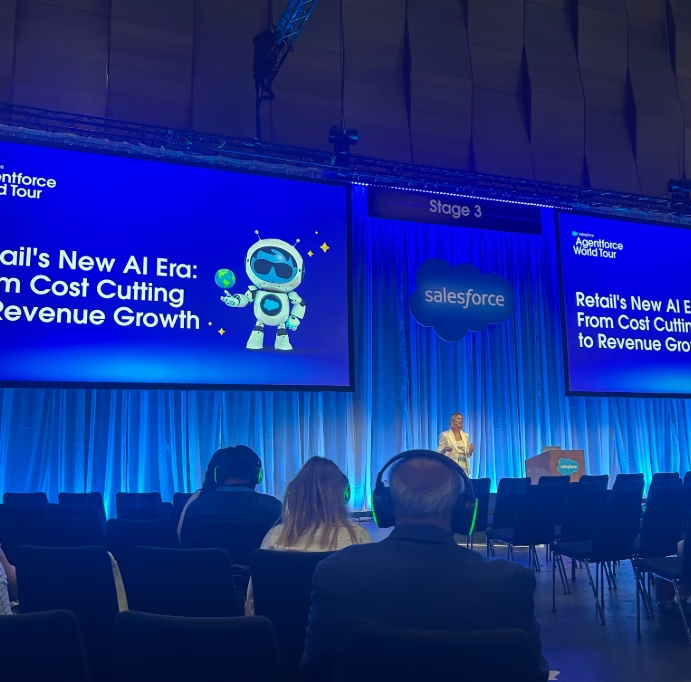
Last week, our team was at Agentforce World Tour London — Salesforce’s biggest UK event of the year, and a day that made one thing unmistakably clear: the era of agentic AI is not a future state. It is arriving now, and it is arriving fast.
The entire day was built around one idea: AI agents that don’t just answer questions but take action. Book meetings. Resolve customer queries. Build reports. Complete purchases. Agents that work alongside your team, and increasingly, on behalf of your customers.
It raised a question we’ve been thinking about a lot at poq: what does the rise of the AI agent actually mean for retail brands, and for the apps that connect them to their customers?
Here’s our take.
1. The agent is already on the phone — it just can’t shop very well yet
Both Apple and Google have now embedded AI agents directly into their operating systems. iOS and Android are shipping on-device AI powered by Gemini small language models — capable of browsing, comparing, and, in limited cases, completing purchases, without the user ever opening an app.
The headlines have been dramatic. The reality is more measured. Standardising AI checkout across millions of products and merchants is genuinely hard. OpenAI recently scaled back direct in-chat checkout, routing purchases through retailer apps instead. The handful of merchant integrations that have gone live tell you everything about how complex the final stages actually are.
The agent-shopper era is real. Mass adoption is 12-18 months away. Brands have time to prepare — but not to wait.
2. Agents won’t replace the shopping journey. They’ll shortcut the boring parts of it.
There’s a seductive assumption behind much agentic commerce coverage: that shopping is fundamentally an optimisation problem. Compare specs, check reviews, find the best price, execute.
But most shopping isn’t an optimisation problem. A fashion purchase is driven by how something makes you feel, what you saw someone wearing, or a shift in how you want to present yourself. A grocery basket is shaped by who’s coming for dinner, what you had yesterday, and your mood. No agent optimising for price and specification is even asking the right questions.
Where agents will have the most real impact is at the point of understanding — helping a customer figure out what they need before any transaction takes place. The discovery and desire part of shopping? That still happens in places with genuine brand presence, editorial content, and personalisation. Which is exactly what a well-built retail app delivers.
3. The brands’ agents recommend will be the brands customers already trust
Here’s the risk that isn’t being discussed enough in retail boardrooms: if AI agents become a significant layer between intent and purchase, brands without strong direct channels will be at the mercy of whoever controls that layer.
This isn’t hypothetical. It’s the same structural dynamic that reshaped retail when Amazon aggregated product discovery, when Google owned search intent, and when Meta owned social influence. Each time, brands with direct customer relationships stayed visible. Each time, brands without them found themselves competing on someone else’s terms — paying for access to customers they had never really owned.
Agentic AI will create a new version of this dynamic. Agents surface products based on signals they can access: reviews, pricing data, publicly available information. But the richest signal of all, genuine purchase intent from a loyal, engaged customer, lives inside owned channels.
4. The native app is becoming more valuable, not less
This is the counterintuitive argument, and we think it’s the right one.
As AI agents commoditise discovery across open web surfaces, the native app, with its push-notification access, biometric trust, persistent brand presence, and rich first-party behavioural data, becomes the channel hardest to replicate or replace.
Across the Poq network, app users already convert at 73% higher rates than mobile web visitors. We’ve seen fashion brands achieve 2.7x higher conversion on app versus mobile web, and nearly 5x higher retention and engagement. Health and beauty brands have recorded 150% higher repeat purchase rates after moving to native.
In an agentic world, that gap is likely to widen. The app is where brand trust is built, where loyalty lives, and where the data signals that agents will ultimately need are generated. That is not a channel to deprioritise. It is the foundation.
5. The right move isn’t chasing agentic AI. It’s owning what agents will need.
The brands that have rushed to integrate AI checkout buttons are learning a hard lesson: the integrations are complex, and the customer experience is underwhelming. The smarter play is building the position that wins when agents do arrive in force.
That means deepening direct channels, particularly native apps, which give brands push access, rich behavioural data, and a persistent branded presence on the device customers reach for first. It means investing in first-party data so that any AI-assisted recommendation layer works with your signals, not guessing in their absence. And it means building personalisation infrastructure now, so that when an agent creates the moment of understanding, your brand is positioned to answer it.
Own the relationship now. Let the agents find you later.
Interested in what a high-performing native app could mean for your brand? Talk to the poq team.




You may be interested in...

Poq and Fast Simon Announce Partnership to Bring AI-Powered Search and Personalization to Native Mobile Commerce

Horze Native App Case Study

Poq Spring/Summer ’26 Release: Dynamic Content Everywhere, Speed and Autonomy for Your Team
